Skip to content

VSF in Congo

From Congo’s vetiver pioneers to a growing field network

The story of vetiver in the Democratic Republic of Congo did not begin with VSF. Earlier pioneers like Alain Ndona helped prove its value for erosion control, roots and infrastructure protection. Today, VSF works with Éric Mpongo to connect that legacy to a new agricultural chapter: nurseries, field evidence, farmer training and a practical vetiver network rooted in Congolese knowledge.

A legacy-aware field story

The story begins with Congo’s vetiver pioneers, then follows the current agricultural chapter with Éric Mpongo. VSF’s role is to document and support that work — so individual field efforts can grow into a trusted network that farmers and communities can rely on.

Timeline

A Congo vetiver timeline

This timeline follows the Congo vetiver story from the early pioneers to today’s field work with Éric Mpongo — and shows how VSF is working to connect that legacy to nurseries, farmer training and a lasting network on the ground.

  1. 2004–2015

    Partial

    Congo’s earlier vetiver pioneers

    Before VSF’s current work, the Vetiver System already had a documented history in the Democratic Republic of Congo. TVNI-era work and Congolese agronomist Alain Ndona helped demonstrate vetiver for erosion control, urban ravines, highway embankments, root-based stabilization, nurseries and infrastructure protection.

    VSF is not introducing vetiver to Congo. It is building on a Congolese history shaped by pioneers, field applications and demonstrations that deserve recognition.

    Field-reportedFuture update
    Earlier Congolese Vetiver System work on exposed slopes and infrastructure protection.
    Earlier Congolese Vetiver System work showed how vetiver could help stabilize road embankments and protect exposed slopes.
  2. 2024–2025

    Partial

    A new agricultural chapter with Éric Mpongo

    A new chapter begins with Éric Mpongo, an agronomist working to bring vetiver into agricultural systems that serve farmers directly: nurseries, planted corridors, soil cover, reduced weeding pressure and low-input production.

    By 2025, VSF was documenting and supporting a new agricultural phase of the Congo vetiver story — one focused on what vetiver can do directly for farmers.

    Field-reported
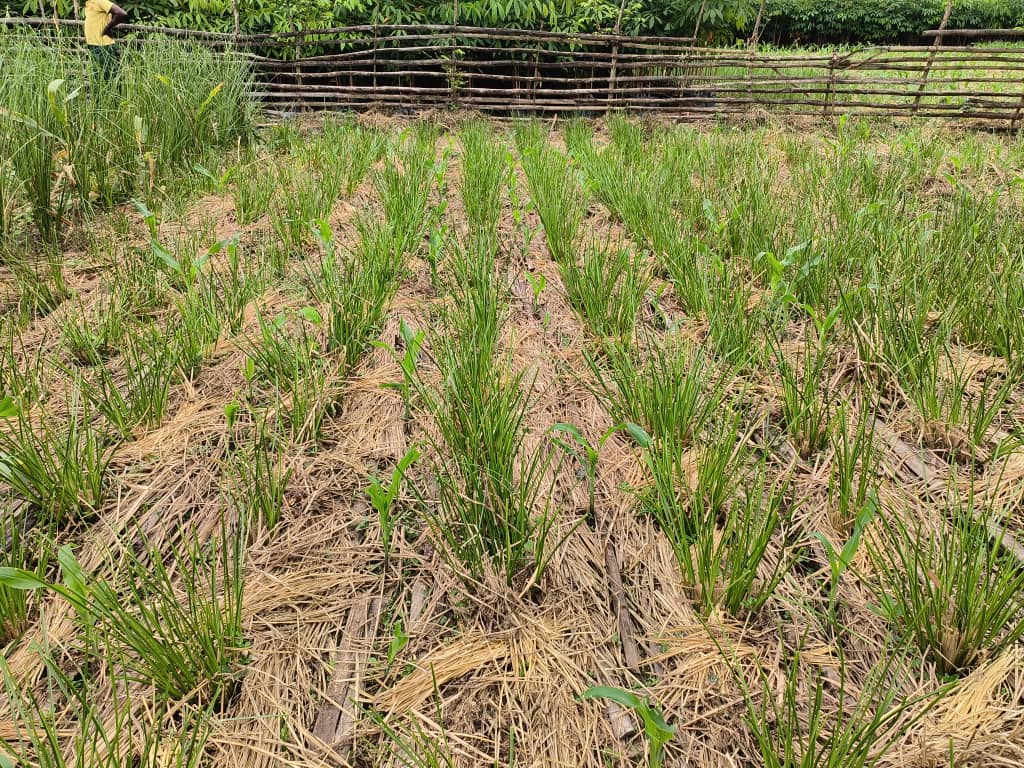
    Young vetiver plants growing in rows at the Lukula nursery.
    Vetiver nursery rows at Lukula — the foundation of the agricultural chapter.
  3. February 2025

    Partial

    Éric shares the field vision

    Éric explains how vetiver corridors and hedgerows can support farmers by reducing slash-and-burn pressure, protecting soil cover, reducing weeding, supporting fertility and lowering dependence on external inputs.

    Field-reported
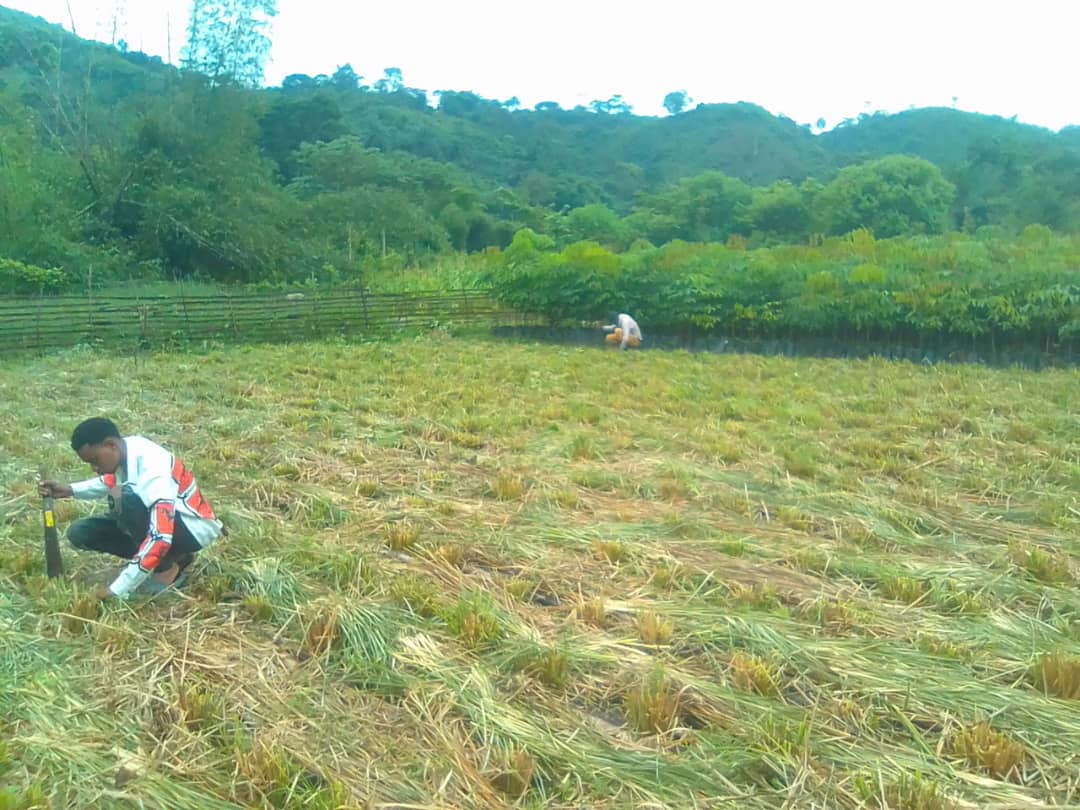
    Field worker among young vetiver plants in a cleared plot in Congo.
    Field conditions in February 2025 — early vetiver work in the Congo agricultural context.
  4. March 2026

    Confirmed

    VSF begins structuring the Congo work

    VSF begins bringing the Congo work together: field evidence, site records, farmer training, public storytelling and a foundation for long-term institutional support.

    Future update

    Milestone

    04

  5. April 2026

    Partial

    Lukula becomes the first strong field anchor

    Lukula becomes the clearest documented field site: a place where VSF can now record survival, spacing, planting method, cutting plan, surface area, associated crops and practical value for farmers.

    The documentation is real and the plants are in the ground — but survival rates, surface area and crop associations still need formal measurement.

    Verified baselineNeeds measurement
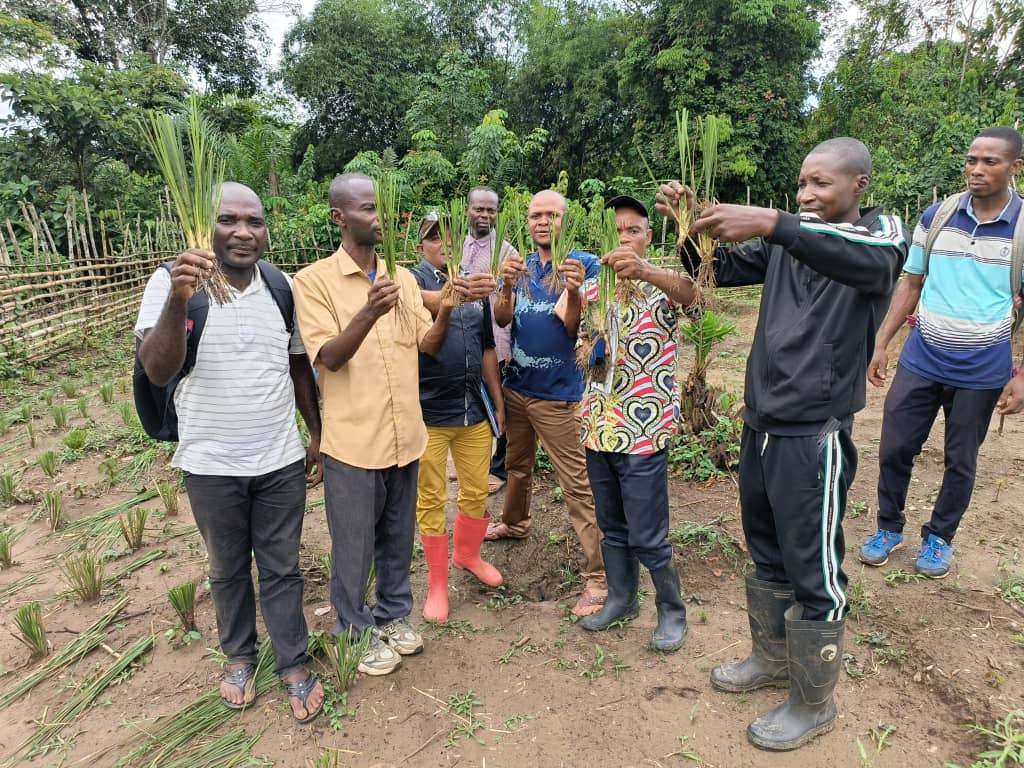
    Éric Mpongo and local partners at the Lukula site holding vetiver plants.
    The Lukula team with vetiver plants grown at the site — April 2026.
  6. 2026 and beyond

    Pending

    From field evidence to a Congo vetiver network

    The next chapter is network-building: nurseries, farmer training, local partners, evidence, public trust and institutional credibility.

    Future update

    Milestone

    06

Field signal

Lukula: the first field signal

Lukula is the current Congo story’s first strong field anchor. It connects Éric’s agricultural vision to a real site, real plants and documented results. It is a promising signal — and one where more measurement is still needed before drawing wider conclusions.

10,000

seedlings

Verified baseline for the Lukula site.

50 cm

spacing

Initial field spacing documented.

Bamboo

mulch

Used against weeds, but not promoted as a universal method.

Approx.

location

Approximate location only — exact GPS withheld until field verification is complete.

Network

From plant to network

A network is not a single site. It is the slow assembly of conditions that allow a plant to become a practical resource for farmers.

Nurseries

Producing enough plants reliably to support real adoption.

Field evidence

Testing uses in real conditions and documenting honestly.

Training

Helping farmers and local actors learn what vetiver can and cannot do.

Documentation

Photos, GPS points, notes and reports that build trust over time.

Local leads

Identifying reliable people who can carry the work forward.

Institutional credibility

Turning field signals into fundable, teachable, public work.

Field atlas

Field atlas: where the network is taking root

The atlas helps visitors follow documented sites, emerging zones and confidence levels. Some locations are approximate. Some details are still being verified in the field.

RDC — FILIÈRE ATLASLukulaKongo CentralKisanganiTshopoDocumented site

Sites

NurseryPhase · 2025

Lukula

Region · Kongo Central

A Kongo Central field anchor where nursery development, planted vetiver and field survival can now be documented more rigorously.

Status
First strong field signal
Lead
Éric Mpongo and local field partners
Next action
Measure survival rate, spacing, surface area, contour alignment, cutting plan, labor needs and crop association.
Evidence
Verified baseline includes 10,000 seedlings, 50 cm spacing and bamboo mulch use against weeds. More measurement is required before making broad claims.
PartialApproximate

What comes next

Help the Congo vetiver network take root

VSF is helping connect Congo’s vetiver legacy with today’s field work: documenting sites, supporting nurseries, training farmers and building the evidence needed for communities and institutions to act.

  • Support field documentation and measurement.
  • Help multiply plants through nursery support.
  • Help train farmers and local actors.
  • Honor Congo’s vetiver history by helping build its next chapter.
RDC field team holding vetiver plants.