Skip to content
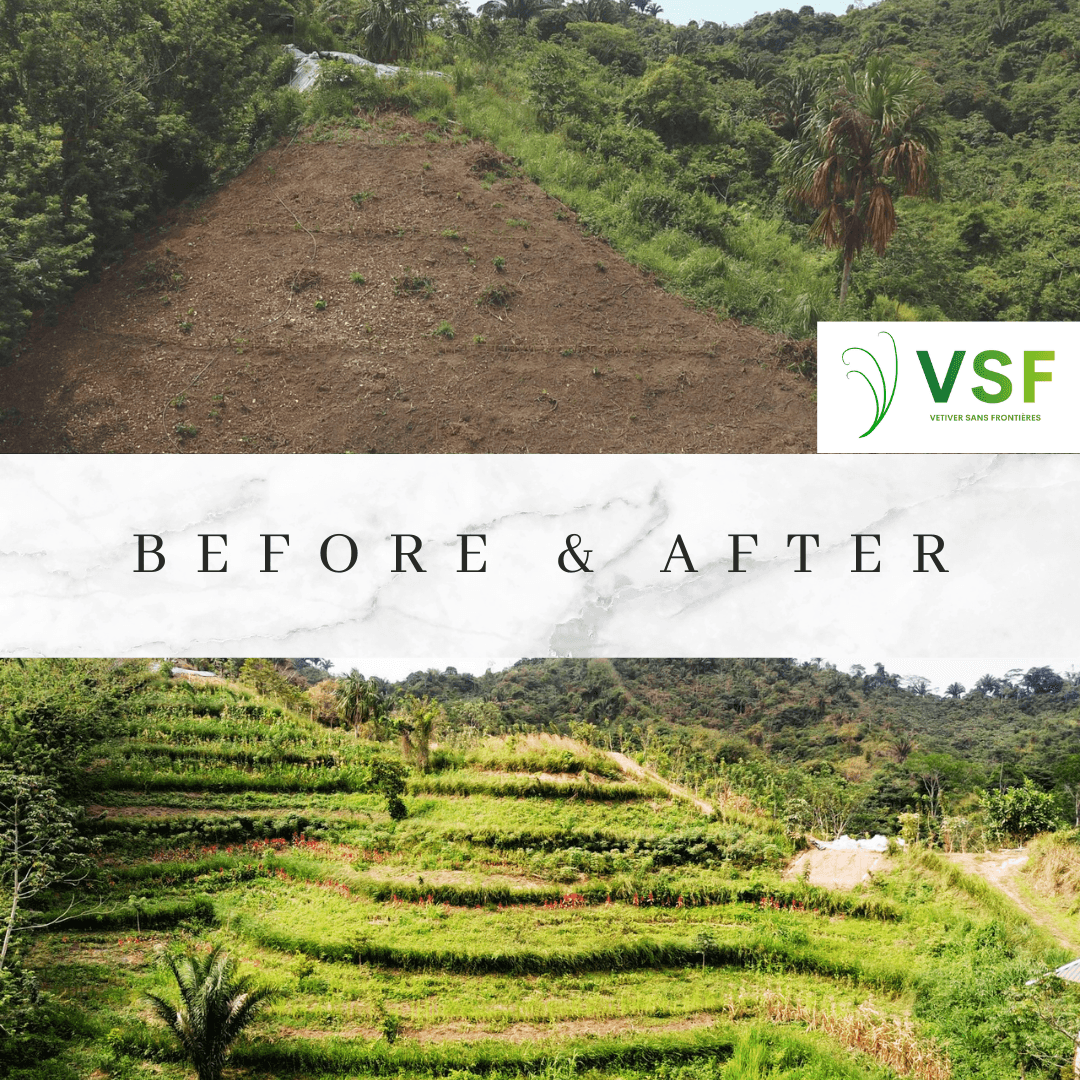
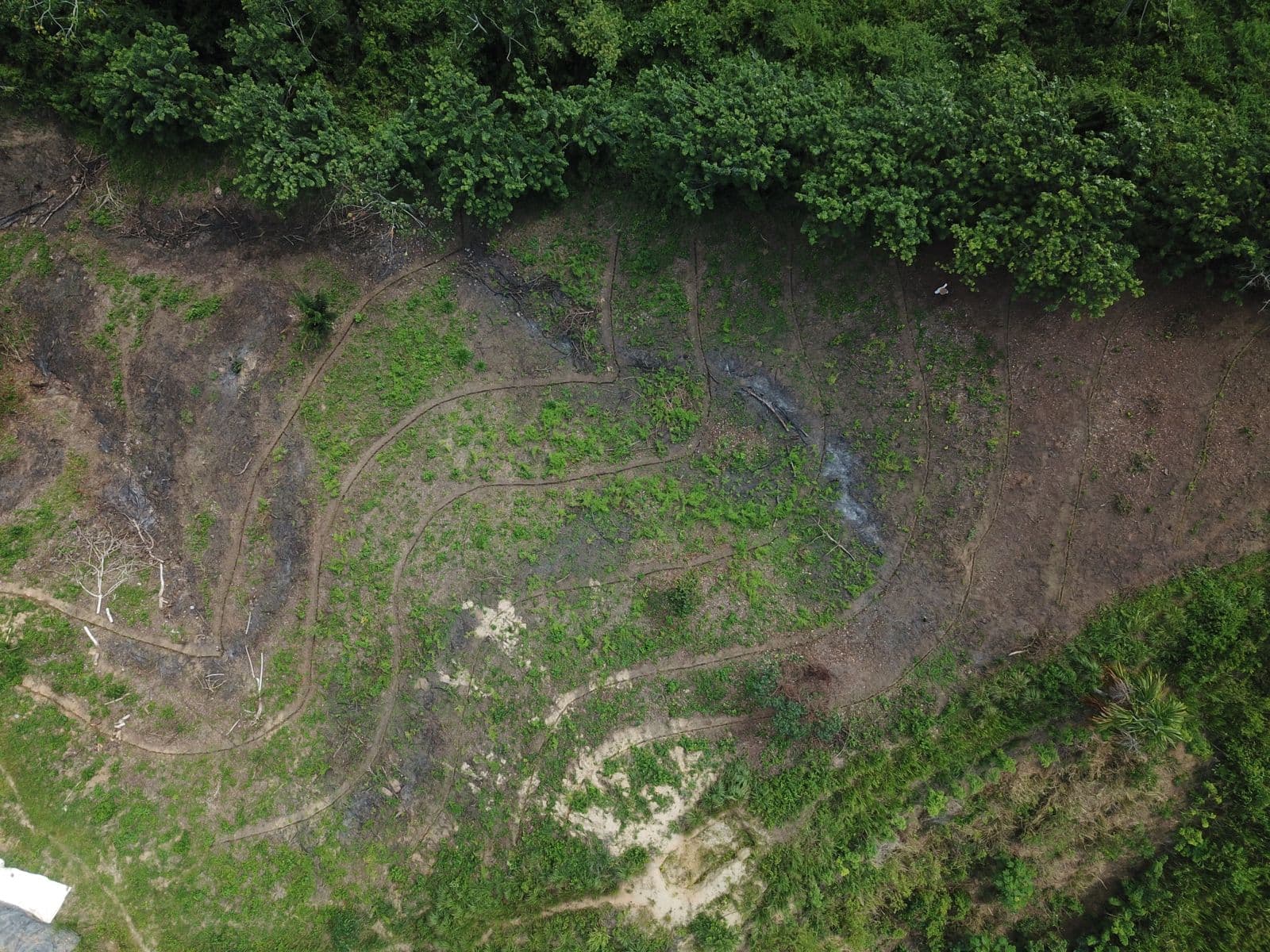
A hillside protected by vetiver hedgerows in dense planted rows
What is vetiver?

Vetiver is a living hedge that helps hold ground in place.

Planted in dense rows, vetiver slows runoff, traps sediment, and helps stabilize slopes, fields, roads, and degraded land.
Identity

Vetiver

Chrysopogon zizanioides — sterile, vegetatively propagated cultivar

Root depth
3–5 metres
Hedge spacing
15 cm in row
Lifecycle
Perennial
Rhizomes
None
Reported results, not promisesThe figures on this page come from published cases and technical references — TVNI, World Bank, ICRISAT, peer-reviewed research. They vary by site, design, and management.
Vetiver hedgerows planted in contour rows across a cultivated hillside
Plant material in placeContour rows show the method in place: plant material, spacing, and site design working together.
What is the Vetiver System?

A plant, or a method?

The Vetiver System is not just a plant. It is a field method that uses a sterile vetiver cultivar, planted in narrow dense hedges, to slow water, trap sediment, and strengthen soil over time.

  • 01Uses a sterile, vegetatively propagated cultivar
  • 02Requires correct plant material and careful establishment
  • 03Works because of the spacing, density, and site-appropriate design
Why depth matters

A grass with roots three storeys deep.

Most pasture grasses send roots about 20 cm into the soil. Tree roots typically stop around 1 m. Vetiver, planted in dense hedges, sends roots straight down — 3 to 5 metres — anchoring slopes that otherwise slip in heavy rain.
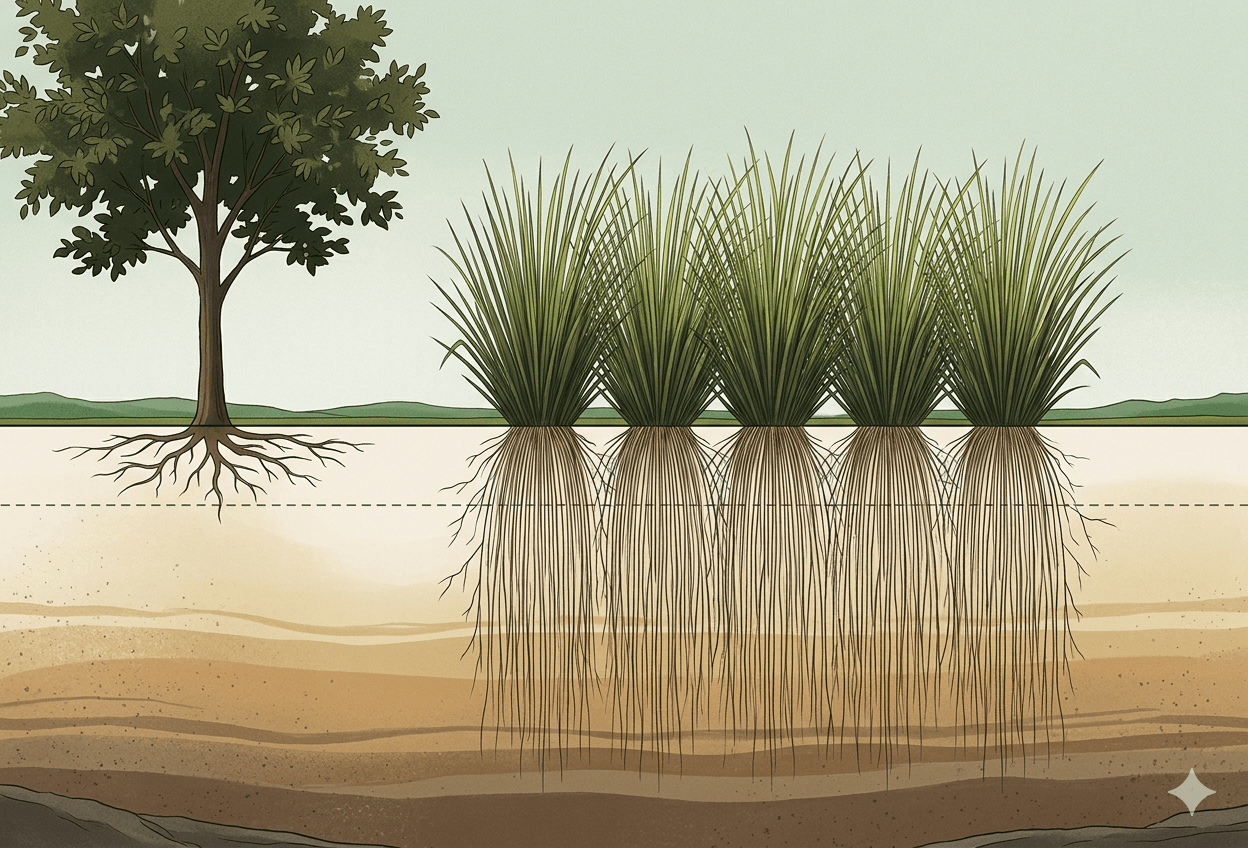
Cross-section illustration showing a tree with shallow roots beside a vetiver hedge whose roots descend several metres into the soil
Year one
3–4 m
Documented root depth in some conditions.
Year two
120–187 cm
Roadside case observation, 24-month survey.
In-row spacing
10–15 cm
Slips planted to form a continuous hedge.
Above ground
1.5–2 m
Hedge height that slows runoff and traps sediment.
Why vetiver is different

Key features that make the system work

Not every grass holds a hillside. These are the specific features that let the Vetiver System do what it does — and the reasons it fails when one of them is missing.

01 / Deep, vertical roots

Deep roots, no rhizomes

The bioengineering cultivar produces neither stolons nor rhizomes, and roots can reach 3–4 m in the first year under some conditions.

02 / Hydraulic effect

Narrow hedge, real hydraulic effect

Planted closely, vetiver forms a living filter that slows and spreads runoff while trapping sediment.

03 / Plant material

The right vetiver matters

For bioengineering, the reference plant is a sterile, vegetatively propagated cultivar; not all vetiver species are interchangeable.

04 / Cost

Often lower-cost, never context-free

Several cases report lower costs than heavy engineering, but only in clearly described contexts.

What vetiver can help with

Specific applications where the Vetiver System has been documented

Specific applications, not slogans. Each of these is referenced in technical manuals or published case studies — not as a promise, but as a documented use.

01 — Erosion control

Soil erosion on slopes and fields.

Slowing and filtering runoff to reduce soil loss on vulnerable slopes and cultivated ground.

02

Runoff and water management

Spreading and slowing moving water so more infiltrates into the landscape.

03

Slope stabilization

Strengthening hillsides and protecting roads, terraces, and infrastructure.

04

Road edges, embankments, canals, banks

Protecting linear infrastructure from edge failure and undercutting.

05

Degraded land and gullies

Supporting recovery on severely eroded or damaged ground.

06

Agriculture on slopes

Protecting uphill fields while supporting crop production.

07 — Filtering

Sediment and agrochemical filtering

Trapping silt and some runoff-transported residues.

— Note

Where vetiver doesn't fit, VSF says so.

Internally unstable slopes and deep mass-movement sites need geotechnical engineering, not bioengineering.

Field evidence

The system is read through sites, not slogans.

Photos from VSF field folders show where vetiver is planted, what it is asked to protect, and how recovery is followed over time.
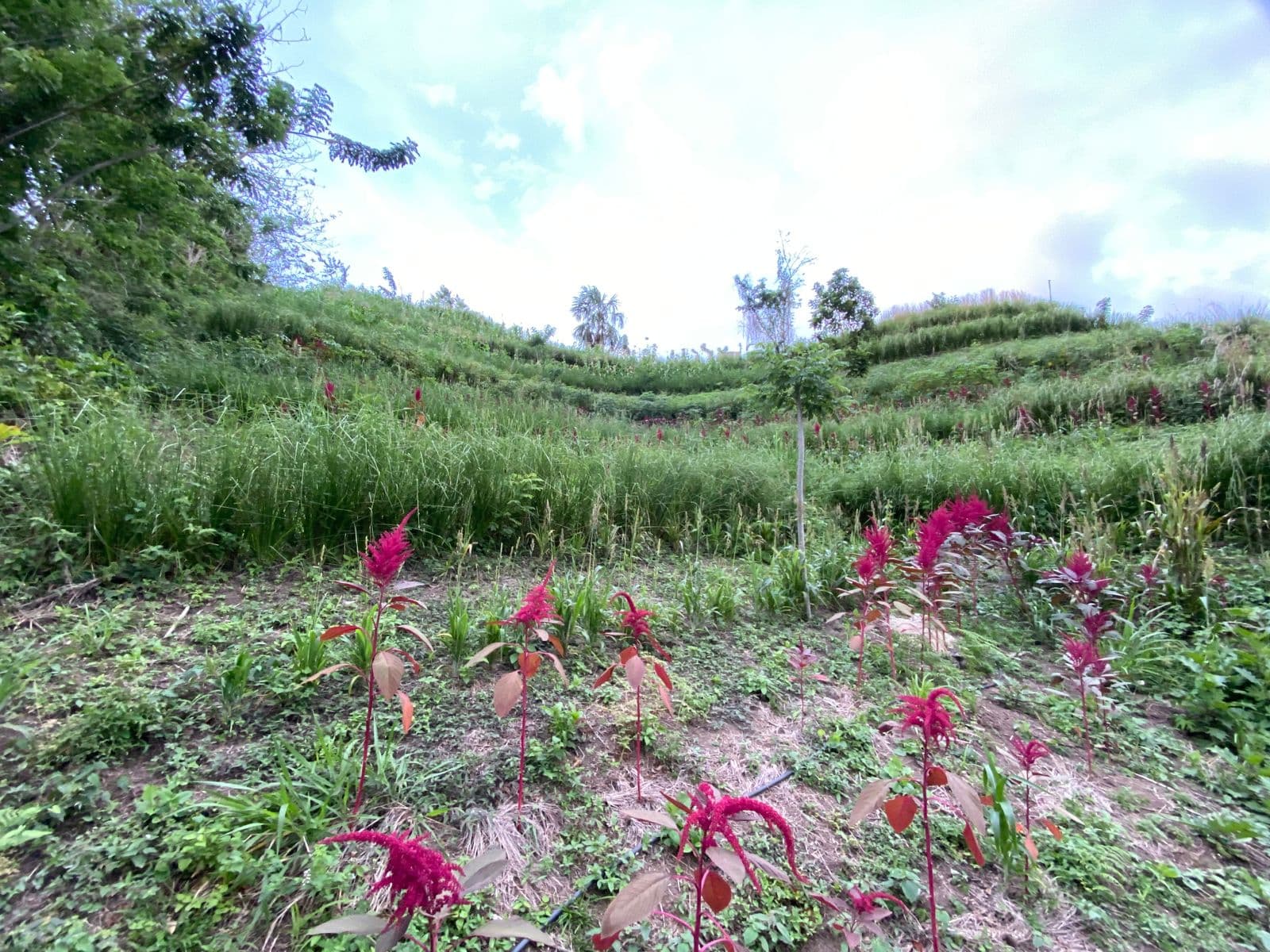
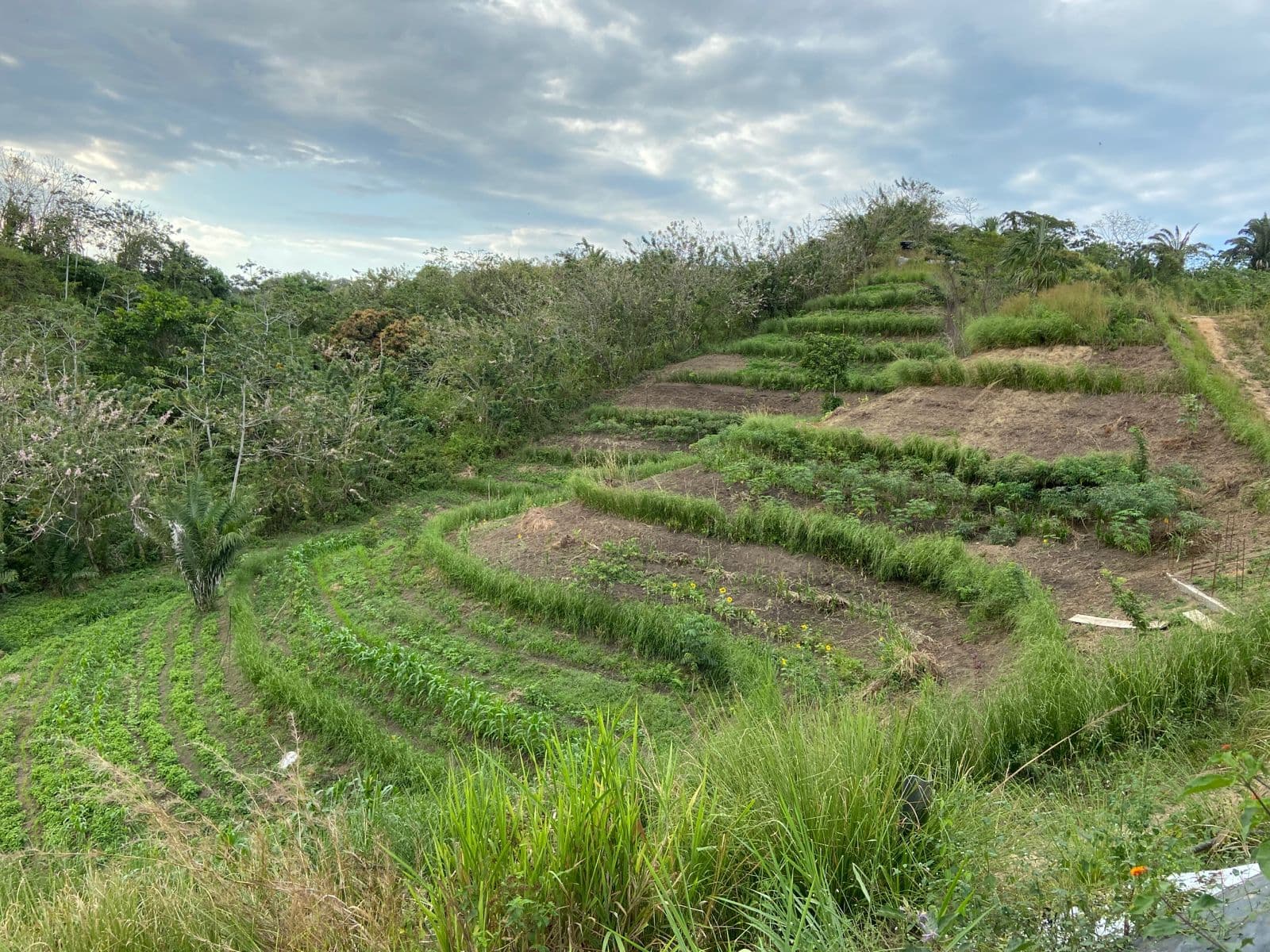
Vetiver planted in contour rows across a cultivated hillside.
Site 01
Contour planting
Vetiver hedges established across a cultivated hillside.
Site 02
Hillside protection
Before and after field comparison showing vegetation recovery on a hillside.
Site 03
Recovery over time
Reported results, not promises

What the research shows

The studies and cases cited here show substantial reductions in runoff, soil loss, and sometimes costs. Actual performance still depends on climate, soil, slope, spacing, hedge age, and establishment quality.

Range, not promiseThese figures show the range of documented outcomes. They are not universal guarantees. Results depend strongly on site selection, design, implementation quality, and ongoing observation.
Cost variesSome documented cases report lower costs than hard engineering alternatives, but cost varies by site, labor, slope, materials, and maintenance.
Soil-loss reduction
90%

Reported up to 90% soil-loss reduction as a TVNI benchmark.

TVNI Technical Reference Manual
Runoff reduction
70%

Reported up to 70% runoff reduction as a TVNI/manual benchmark.

TVNI Technical Reference Manual
ICRISAT case results
69% & 76%

69% runoff reduction and 76% soil-loss reduction.

ICRISAT on-farm research
Ethiopia case results
62% & 56–62%

62% runoff reduction and 56–62% soil-loss reduction on 9% slope.

Jijiga erosion control study
Thailand peer-reviewed study
31–69% & 62–86%

31–69% runoff reduction and 62–86% soil-loss reduction on steep slopes.

Donjadee & Tingsanchali 2013
Colombia CIAT cassava case
11.6% → 3.6% & 142 → 1.3 t/ha

Runoff from 11.6% to 3.6% of rainfall; soil loss from 142 t/ha to 1.3 t/ha. Marked as spectacular but highly context-specific.

CIAT cassava intercropping study
How the Vetiver System works

A five-step field method

The Vetiver System is not automatic. It requires careful planning and adaptive management.

1Step 01

Read the site

Assess slope, soil, rainfall, erosion paths, water flow, access, and local land use before deciding to plant.

2Step 02

Prepare healthy plants

Source or grow correct plant material from reliable nursery stock. Plant material matters.

3Step 03

Design the lines

Mark contours or layouts before planting. Proper spacing and alignment are critical.

4Step 04

Establish the hedge

Plant firmly, water, weed, protect, and fill gaps early. First-year care is intensive.

5Step 05

Maintain and observe

Trim, replace weak plants, document sediment and survival, and adapt based on what you observe.

Establishment timeline · one documented contextEstablishment timeline varies by context: slope stabilization in a documented road-slope case began around 3–4 months; roots observed at 68–85 cm at 6 months, 70–120 cm at 12 months, and 120–187 cm at 24 months. Frame this as one documented context, not a universal growth curve.
What vetiver is not

Clarity on where the system does not work.

Important caveat

Vetiver is powerful, but it is not magic. It is not a replacement for engineering in every situation, and it does not work well when planted without planning, follow-up, or local ownership.

Not instant

Not an instant fix

Establishment takes time; results build over seasons, not weeks.

Not engineering

Not a substitute for geotechnical assessment

Where a slope is internally unstable or structurally compromised, engineering assessment is required before planting.

Not any vetiver

Not "any vetiver"

Plant material matters. The bioengineering cultivar is sterile and vegetatively propagated. Not all vetiver species are interchangeable or safe to plant.

Not maintenance-free

Not maintenance-free during establishment

First-year care includes watering, weeding, protection, and gap-filling. Neglect leads to failure.

Not universal

Not a universal solution for every site

Wet season timing, soil depth, slope angle, access to water, and local commitment all affect success.

Where the evidence comes from

Cited sites span continents and conditions.

The figures earlier on this page come from documented work in very different climates and slopes. VSF's role is to read each site on its own — not to copy results from elsewhere.

TH
Thailand — peer-reviewed
Donjadee & Tingsanchali 2013 · steep slopes
62–86%
CO
Colombia — CIAT
Cassava intercropping · 142 → 1.3 t/ha
Case
ET
Ethiopia — Jijiga
Erosion control · 9% slope
56–62%
IN
India — ICRISAT
On-farm research · soil & runoff
69 / 76%
CD
DRC — VSF active
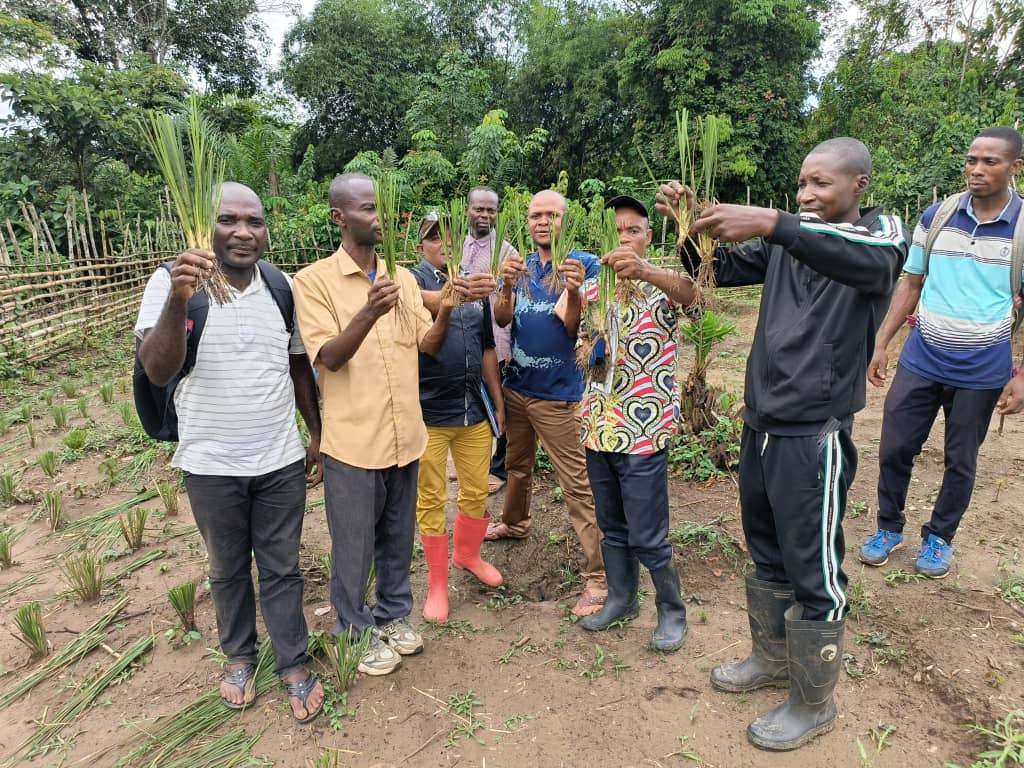
Nursery network · 4 regions
Field
CR
Costa Rica — Finca Sin Fronteras
Long-term site · before/after evidence
Field
Why VSF works with vetiver

Our role is guidance, not selling a miracle solution.

We help partners understand where the Vetiver System fits, how to implement it correctly, and what is actually happening on the ground.

01VSF explains the Vetiver System in plain language.
02VSF helps read sites before recommending planting.
03VSF supports nurseries, layout, planting, and follow-up.
04VSF separates published benchmarks from field observations.
05VSF makes public tracking understandable when data is available.
Next steps

Choose how you want to engage.

Whether you are learning, piloting, supporting, or implementing at scale, there is a starting point.