
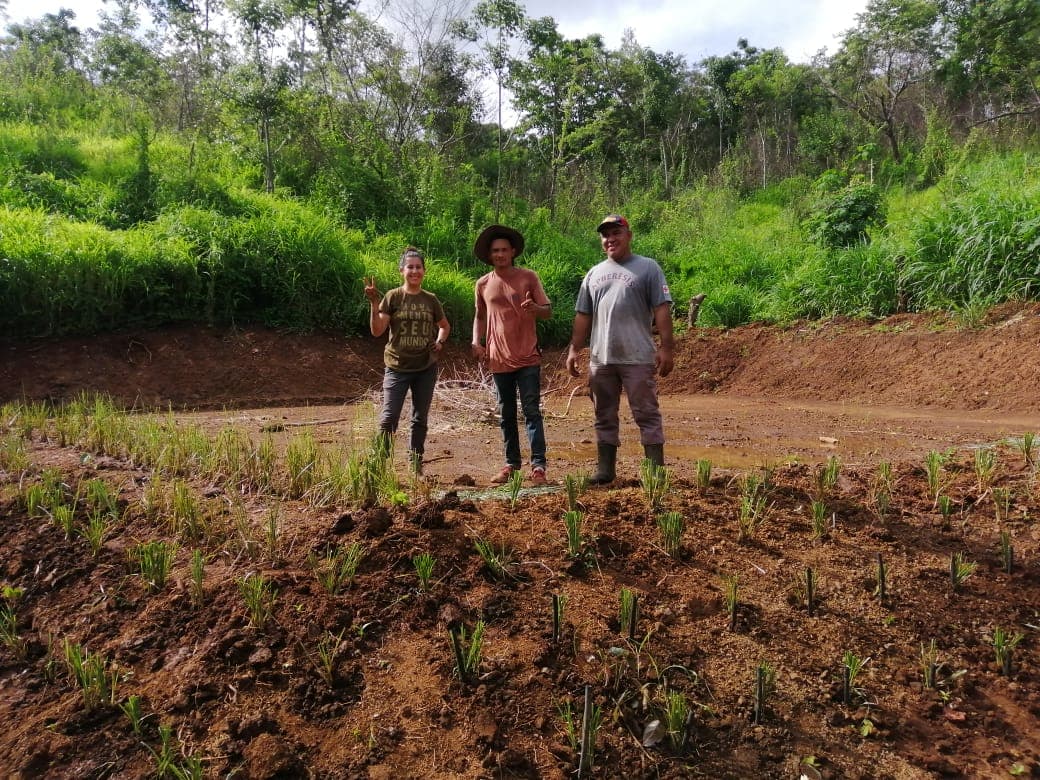
From Fire to Future: Breaking the Cycle of Slash-and-Burn Agriculture
In the Congo Basin, millions of smallholder farmers face an impossible choice: feed their families today or preserve the land for tomorrow. Slash-and-burn agriculture remains one of the few accessible methods for clearing fields quickly — but its long-term consequences are devastating.
Soils lose fertility within a few seasons. Farmers are forced to clear new land. Forest cover shrinks. Carbon emissions rise. Poverty deepens.
This cycle is not driven by ignorance — it is driven by necessity.
The Challenge: A Cycle of Land Degradation and Poverty
Slash-and-burn agriculture persists because alternatives are often too costly, labor-intensive, or technically complex for rural communities.
Key impacts observed in affected regions:
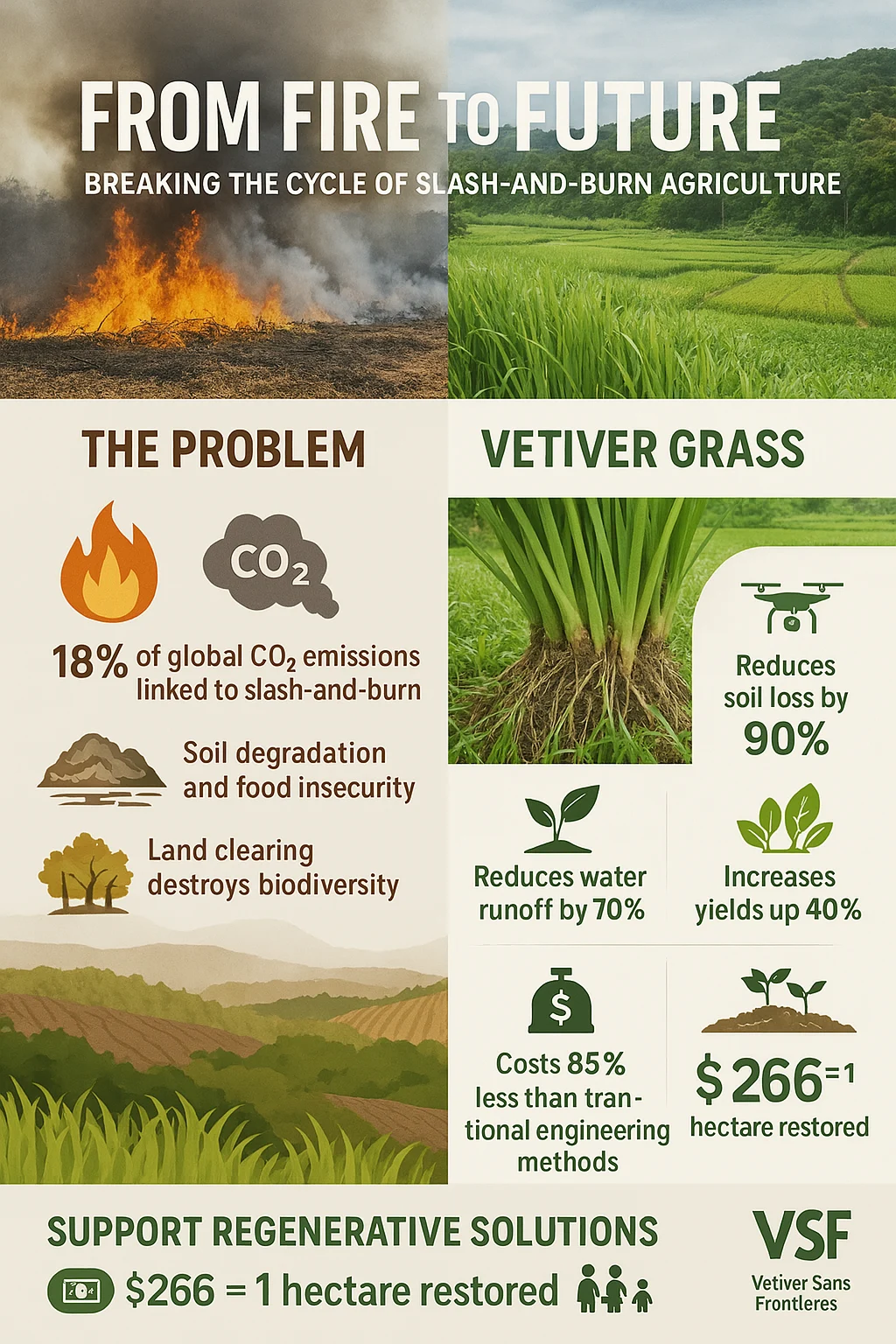
Rapid soil fertility loss requiring new land clearing every 2–3 years
Increased erosion and flooding due to exposed soil
Declining crop yields and food insecurity
Loss of forest ecosystems and biodiversity
Significant carbon emissions from burning vegetation
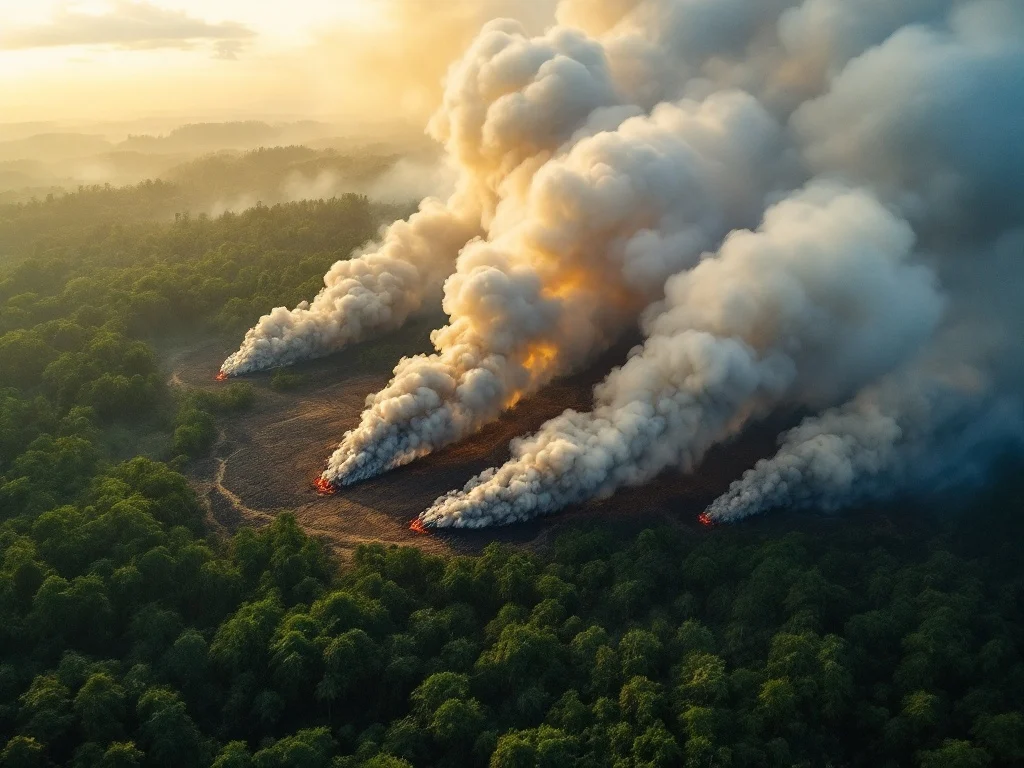
Breaking this cycle requires solutions that are affordable, simple to implement, and supported in local field contexts.
A Practical Solution: Vetiver-Based Regenerative Farming
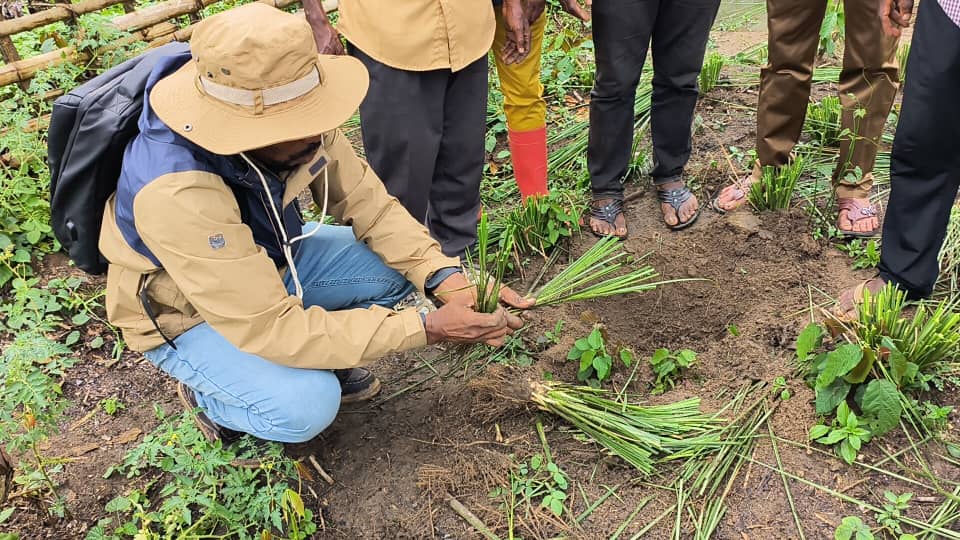
The Vetiver System uses strategically planted hedgerows of vetiver grass to stabilize soil, retain water, and restore land productivity over time. Unlike engineered infrastructure, it is low-cost, scalable, and maintained by local communities.
The takeaway is straightforward: Vetiver offers a practical way to move from destructive burning cycles toward regenerative farming that protects soil, water, and long-term productivity.
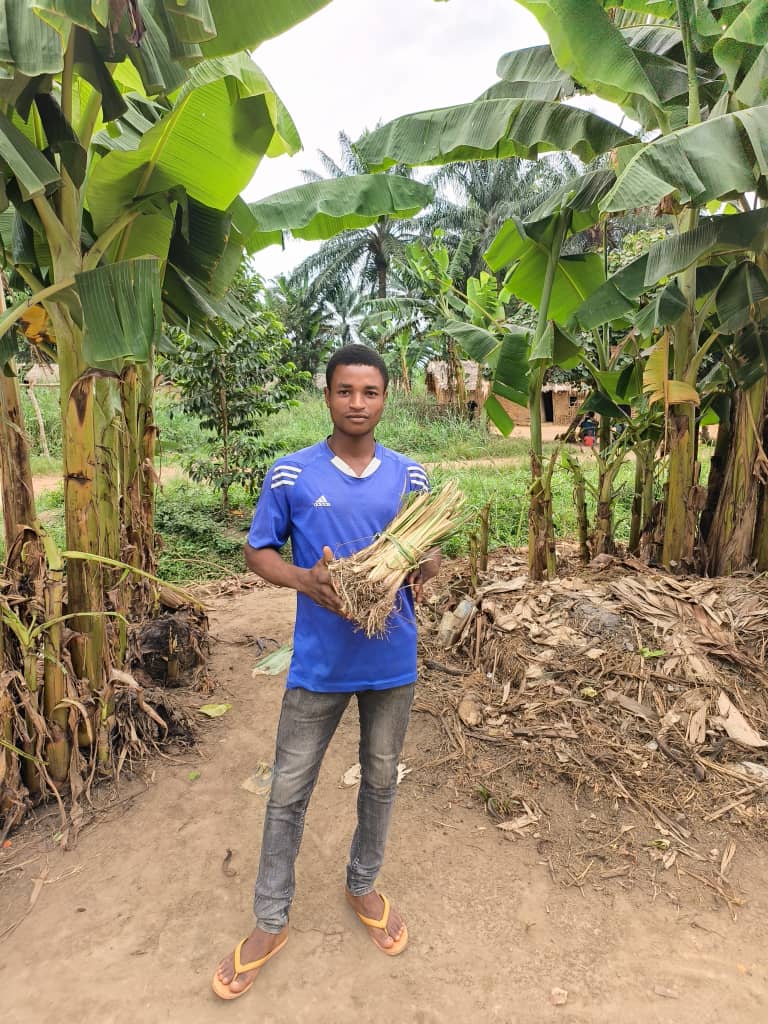
Meet Eric Mpongo – A Changemaker in the Congo

"I couldn't believe something so simple could be so powerful,"
recalls Eric Mpongo, an agronomist and community innovator. He's spearheading a movement that turns crisis into cultivation. Faced with the deeply ingrained practice of slash-and-burn agriculture, Eric developed a Vetiver corridor system that empowers farmers to shift from destructive cycles to regenerative farming.
With over eight regions now adopting his method Eric’s approach uses 10,000–20,000 Vetiver slips per hectare to mulch crops and naturally restore the soil, reduce labor, and increase yields.
But Eric didn’t stop there. To educate farmers, he began building a 10,000-plant Vetiver nursery, forming a live training hub for agroecological transformation.
Working with a major agricultural group, Eric continues to advocate for systemic change, backed not by speeches, but by actionable models other farmers can follow.
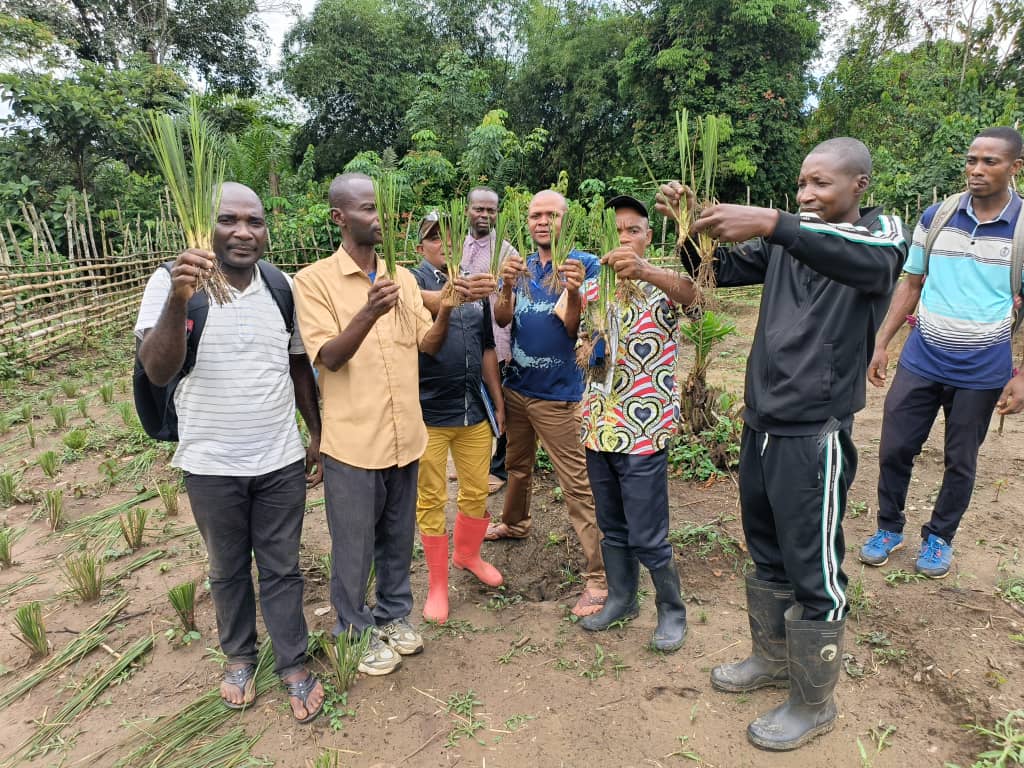
In just one growing season:
- Soil erosion dropped by approximately 90% (field observation reported by Eric Mpongo from initial trial sites; not yet independently verified)
- Crop yields increased by approximately 40% (field observation reported by Eric Mpongo from initial trial sites; not yet independently verified)
- Additional income streams emerged
- Zero need for new land clearing
How We Make It Happen
"Before Vetiver, I burned my land every season, watching my soil disappear. Now, my children will inherit fertile ground, not ashes."
Eric’s work spans across the Congo, with active projects in:
- Kongo Central (2 sites)
- Mongala (2 sites)
- Équateur (2 sites)
- Tshopo (1 site)
- Tshuapa (1 site)
This network is creating a living ecosystem of resilience across the country.
Transform Land, Transform Lives
The practical next step is shared learning, local pilots, and steady support so the response can become a durable field model.